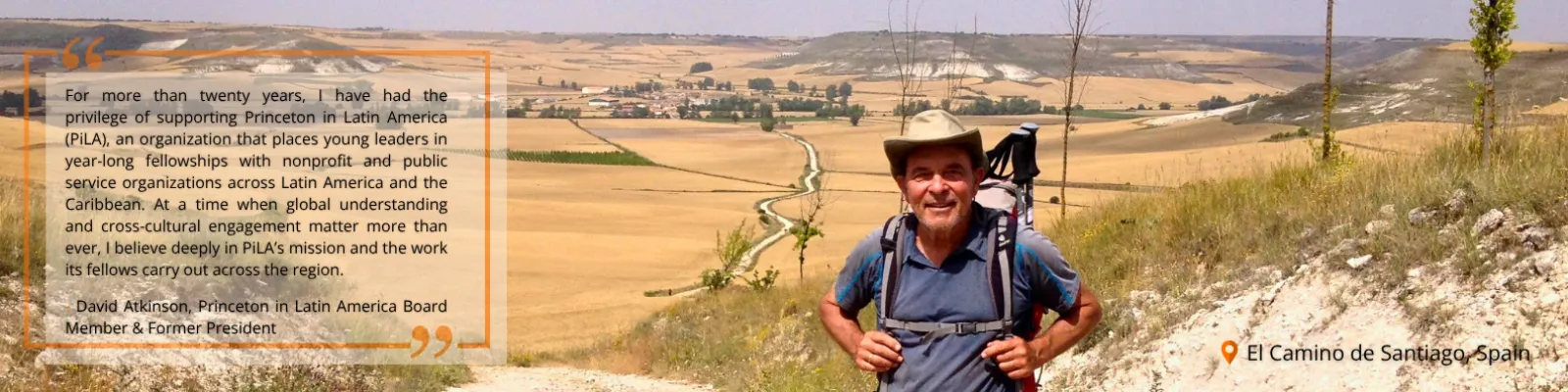
Every Step Supports the Next Generation of PiLA Fellows
"The Camino has given me so much over the years. This walk is an opportunity to share that experience with my family while supporting the next generation of PiLA Fellows."
— David Atkinson
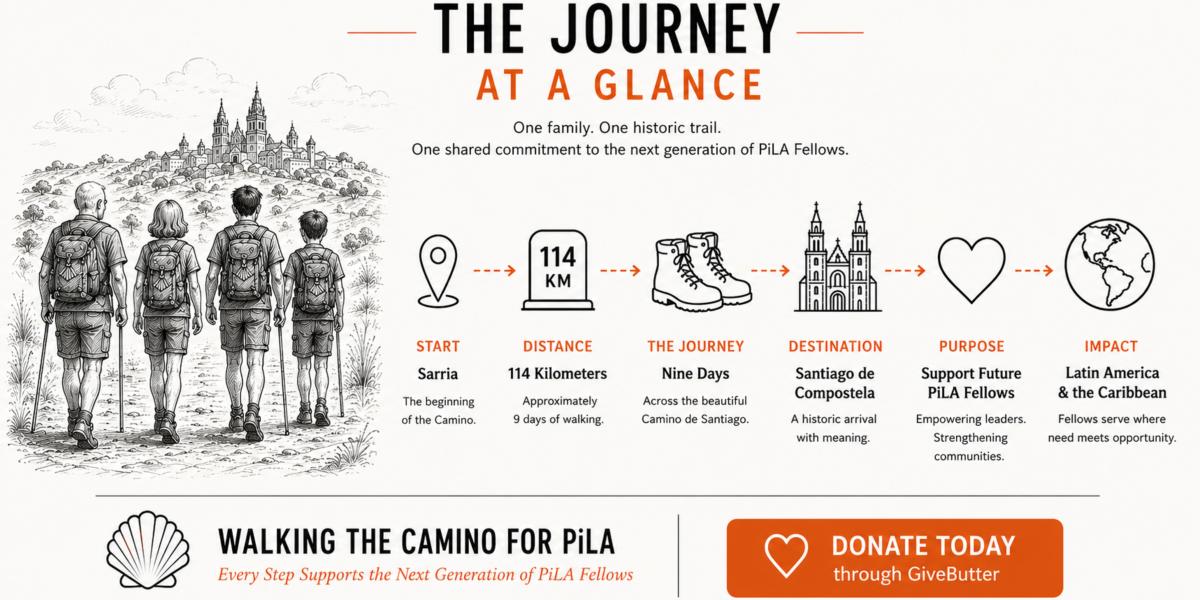
About the Campaign
For more than two decades, David Atkinson has been one of Princeton in Latin America's most dedicated champions. As a former Board President and current member of PiLA's Board of Directors, David has played an instrumental role in advancing PiLA's mission and supporting generations of fellows serving throughout Latin America and the Caribbean.
This summer, David is returning to the Camino de Santiago, one of the world's most renowned pilgrimage routes. Together with his daughter and grandson, he will walk 114 kilometers along the historic Sarria-to-Santiago route through the hills and villages of Galicia, Spain.
While the Camino has long held personal significance for David, this journey has an additional purpose: raising support for the next generation of PiLA Fellows.
For David, the Camino embodies perseverance, reflection, and community—values that closely mirror PiLA's mission of preparing young leaders through immersive international service. By sharing this experience across three generations of his family while raising support for PiLA, David hopes to help ensure that future fellows have the opportunity to learn, serve, and lead alongside organizations throughout Latin America and the Caribbean.
Support the Journey
Every contribution directly supports Princeton in Latin America's Fellowship Program, helping place talented young leaders with nonprofit and community-based organizations working in: Education, public health, environmental conservation, human rights, entrepreneurship, and community development.
You can support David's journey by sponsoring his walk at one of the following levels:
25¢ per kilometer — $28.50
50¢ per kilometer — $57.00
$1.00 per kilometer — $114.00
...or by making a gift of any amount.
Every gift makes a difference for our PiLA and will help fuel David along his journey.
To support David's efforts and support PiLA, consider donating through our GiveButter Campaign: https://givebutter.com/walking-the-camino-for-pila-ykcylb
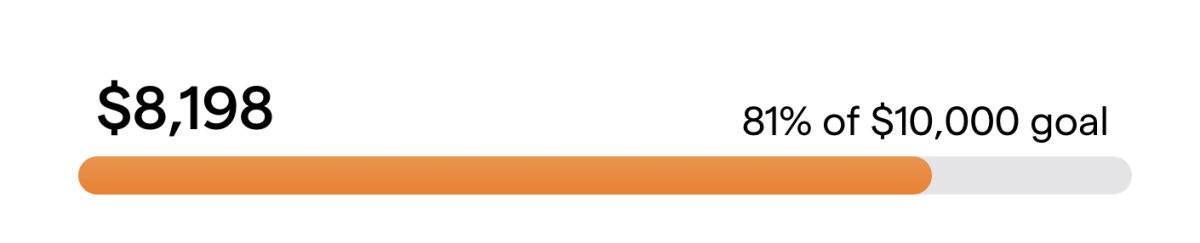
Campaign Progress
Follow David's Journey
This July, we'll share regular updates from David as he makes his way toward Santiago de Compostela.
Follow along for photos, reflections, stories from the trail, and daily milestones of the pilgrimage. Whether you're cheering him on from home or supporting the campaign with a donation, we invite you to join him on the journey.
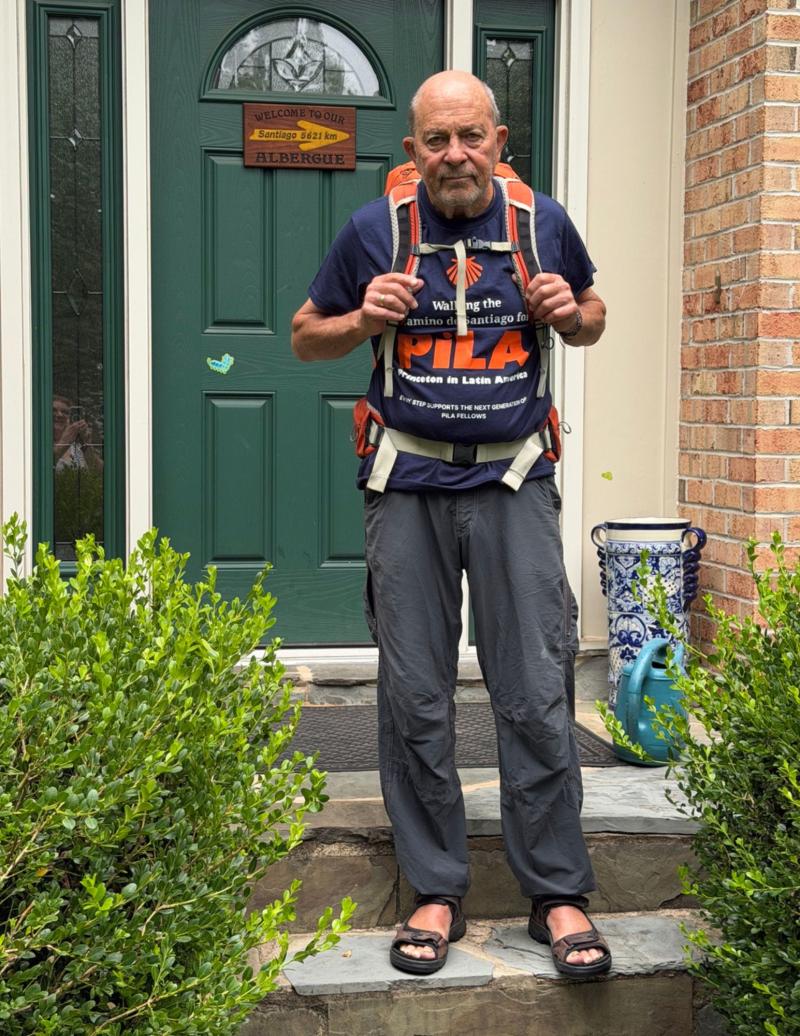
Pre-Departure: Preparing to Leave
The Camino begins at your doorstep. We’re off to Spain.
Day One: Arriving in Spain
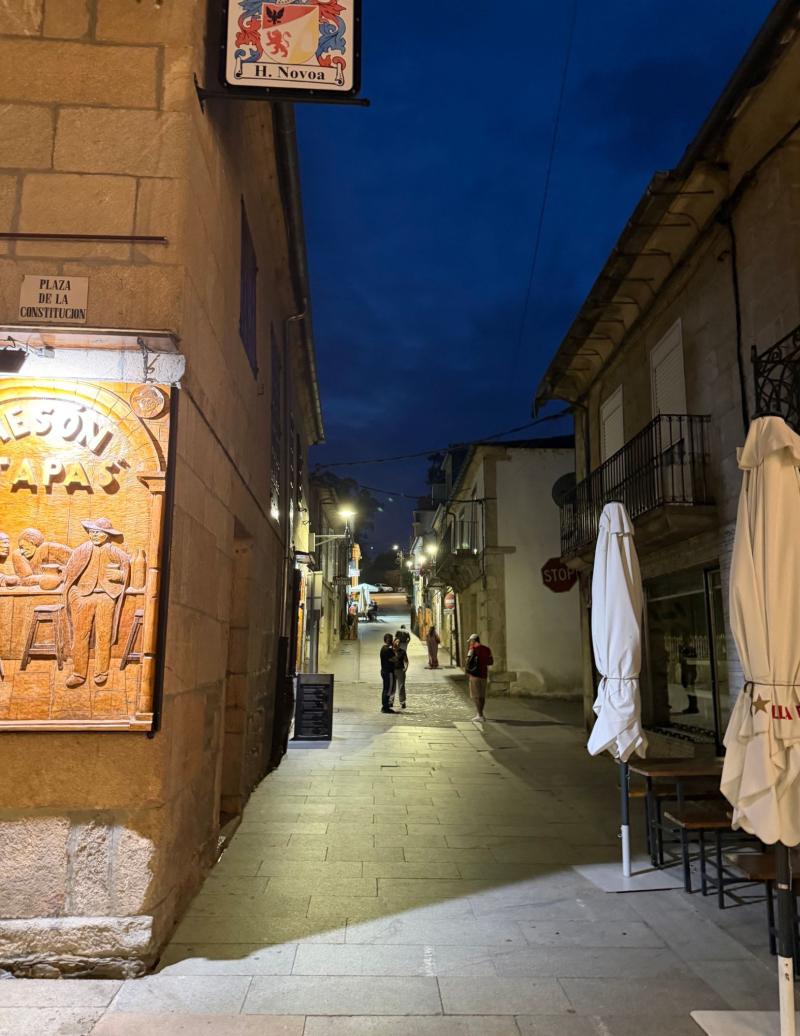
The peace and quiet of the Calle Mayor of Sarria at 11 pm, anticipating the throngs that will fill this street tomorrow morning. After long flights from the States, logistical issues in Madrid, and a delayed train departure, we had a beautiful ride to the starting point of our walk. Tomorrow, a stay in Sarria to organize for the next ten days. And perhaps a dip in the Rio Sarria.
Day Two: A Day in Sarria
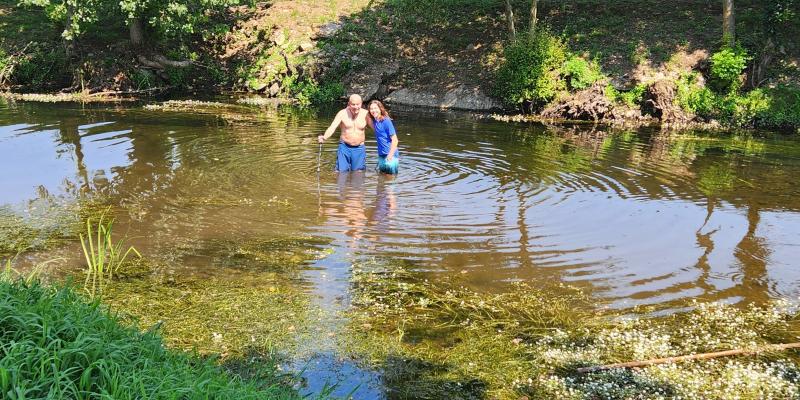
A rest day in Sarria, getting ready for our walk, with a ceremonial dip in the Rio Sarria with my grandson Alex. Tomorrow, 14 kilometers to Paradelo. Through fields of grass and forests of oaks and chestnuts.
Day Three: Beginning with a 14-kilometer walk to Paradela
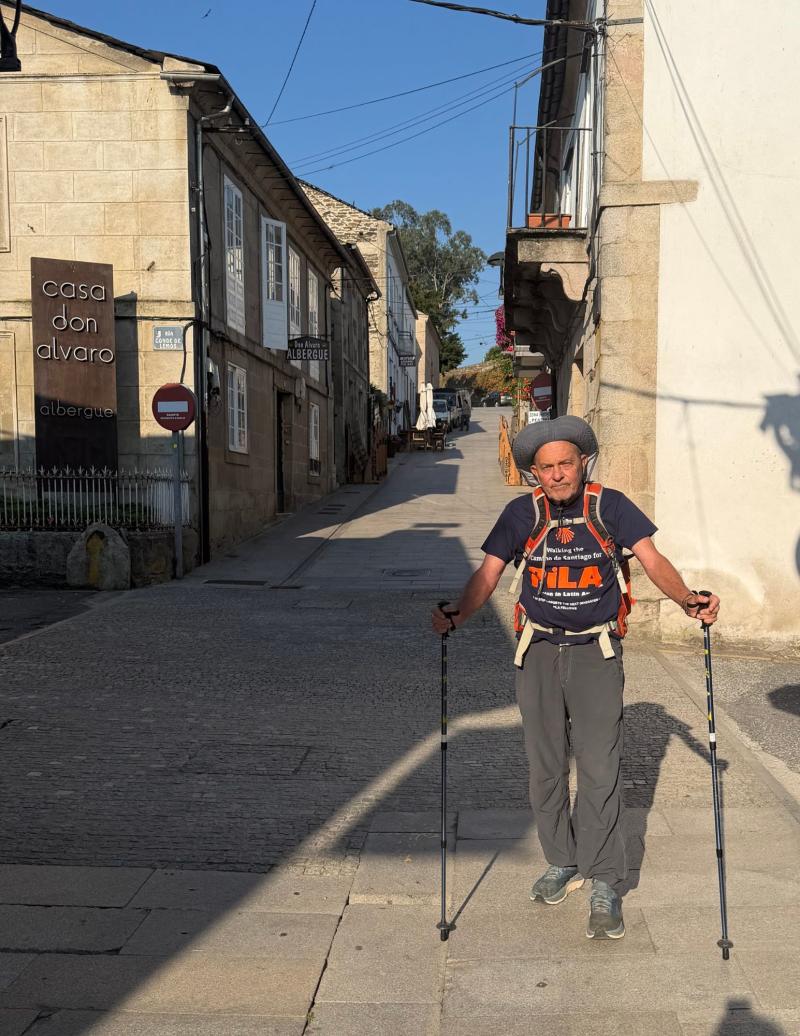
The day began inauspiciously when we accidentally strayed a couple of kilometers off route! And I thought I was such an experienced pilgrim. But, with the help of my daughter and grandson, we were back on the way.
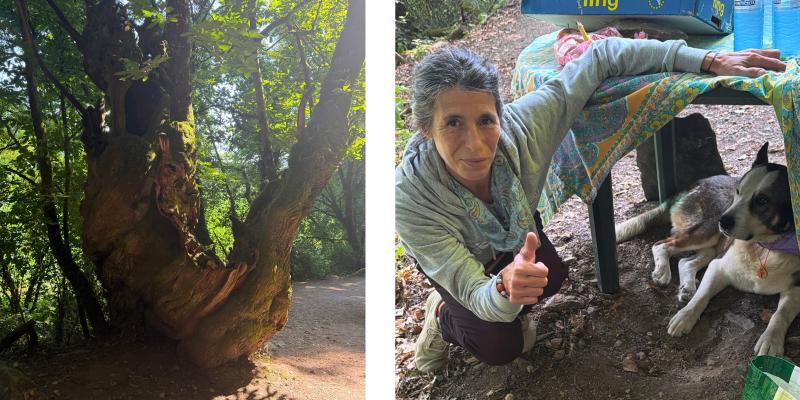
One highlight (among many) was a conversation with Ana Gómez, who has spent the past sixteen years on the Camino, selling fruit and drinks from a small stand beside an 800-year-old oak tree that holds the mysteries and secrets of the pilgrimage in its gnarled branches. Some of those secrets she shared.
Another gift came near the end of the day's walk, which had been a tough one for me. My grandson turned to me and said, "Vovô, I'm so glad I came on this walk."
Day Four: Paradela to Portomarín
An easy 8-kilometer walk from Paradela to Portomarín, in anticipation of a longer day tomorrow—17 kilometers.
Under the leadership of my daughter, we took a swim in the Río Miño (see below), then capped off the day by watching Spain's victory in the quarterfinals of the World Cup at a restaurant near the central plaza.
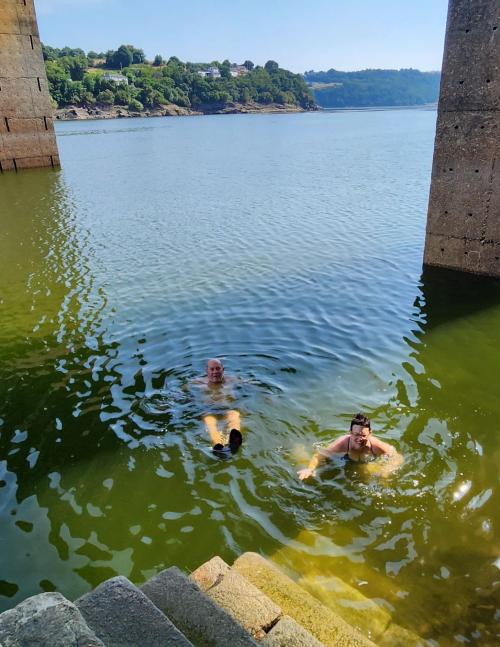
Day Five: Seventeen kilometers in 90-degree heat, beginning with a 450-meter climb.
Wanting to keep to our schedule of reaching Santiago by July 17, we broke one of my cardinal rules and sent two of our backpacks ahead to our next albergue using a transport service. A wise decision, especially for me. It was a tough walk that took more than six hours, due mainly to my pace. My grandson (sometimes running) and daughter carried our third pack, along with our water and other essentials.
Meanwhile, I tracked the arrival of my son Jonathan as he flew from Washington to Madrid, connected by Metro to Chamartín Station, boarded a train to Sarria, and finally took a taxi to meet us at our albergue. When we were only five minutes from our destination, his taxi slowly pulled alongside us to let him out for the final couple of hundred meters of the day's walk. To the relief and joy of his father.
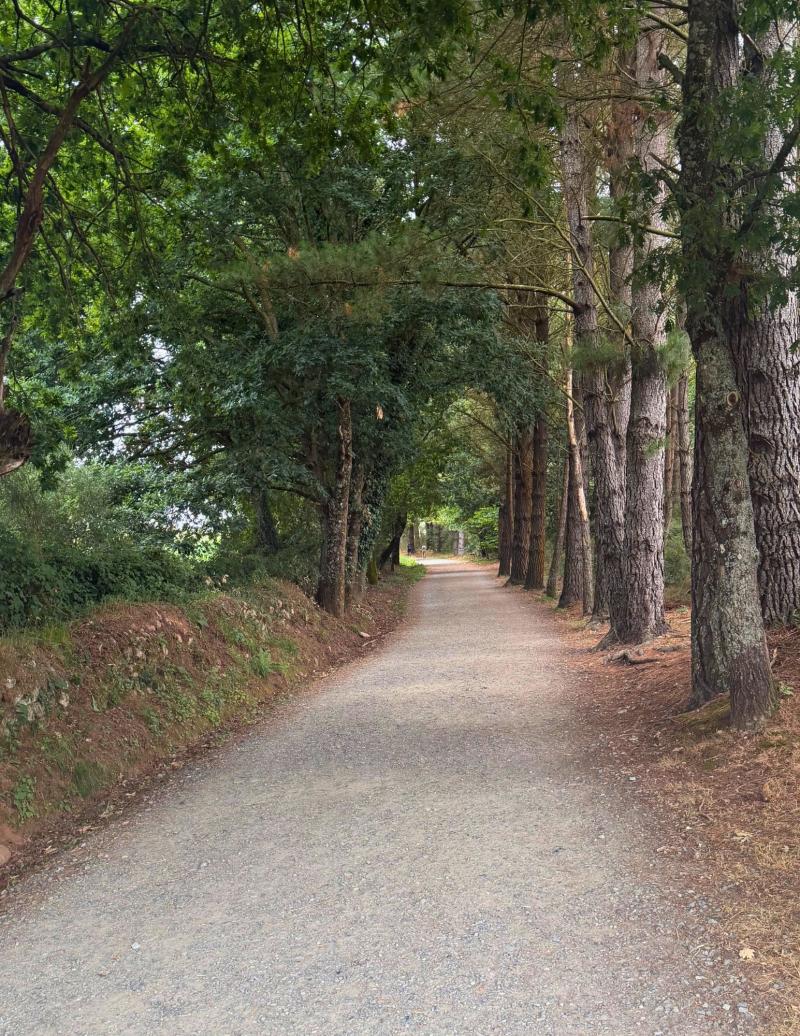
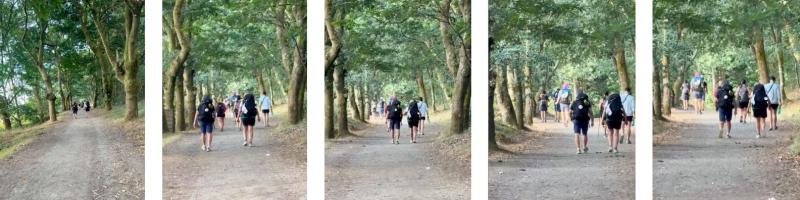
A reflection on this pilgrimage: some people do not care for these last 100 kilometers of the French Way. I am not one of them. To understand why, take a look at today's passage:
Day Six: Onwards, to Ponte Campaña
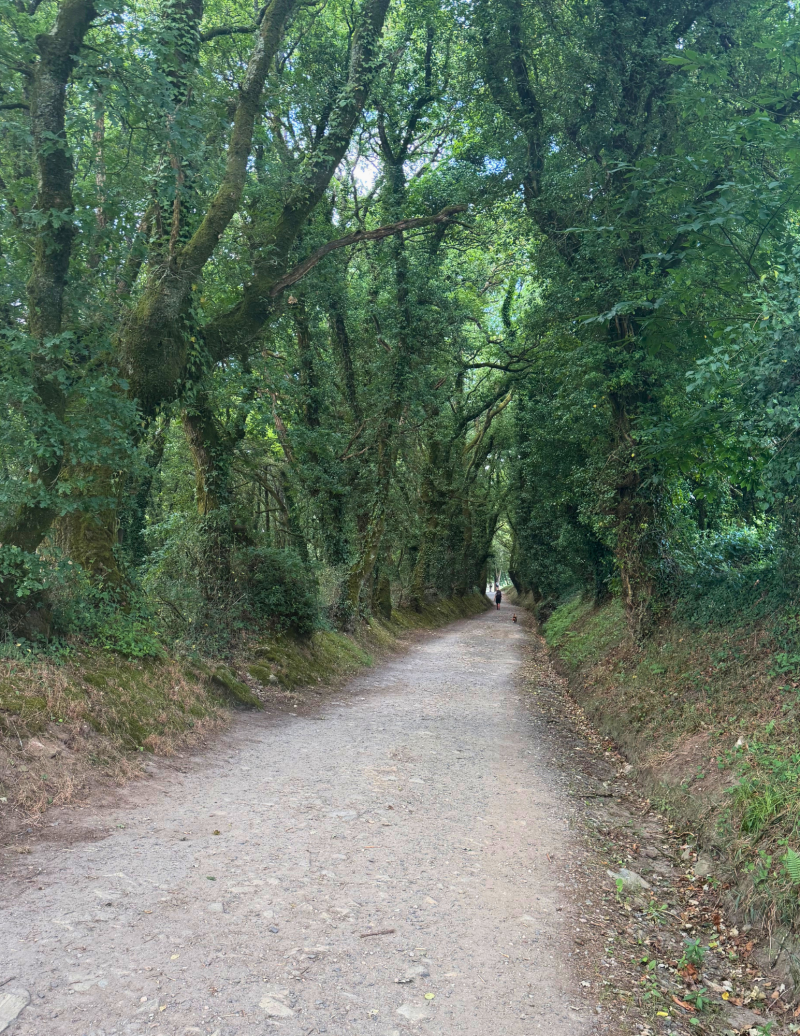
An easy 13-kilometer walk to the small village of Ponte Campaña through wooded paths that my son Jonny said reminded him of a fairy tale—or perhaps a Guillermo del Toro film (see below).
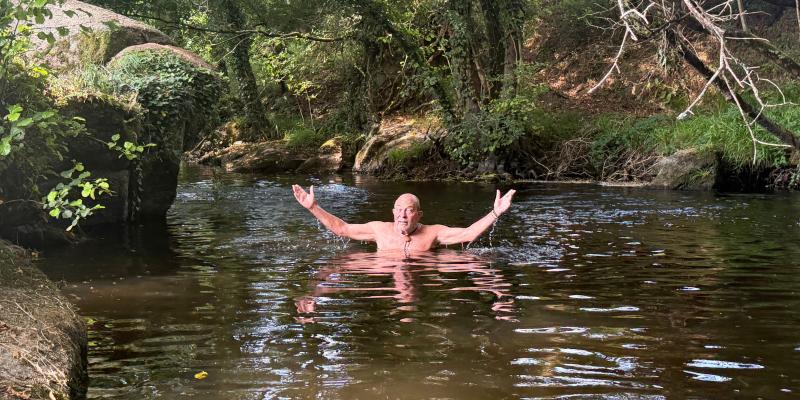
My grandson Alex introduced a whole new spirit to the Camino, throwing a Frisbee with Jonny and finding a zip line that he tackled with increasing daring on each ride. Our albergue, Casa Domingo, turned out to be one of the finest I've ever stayed in. We had our own cabin beside the Río Pambre, where we all took an icy swim (see below), and finished the evening with a communal dinner alongside about a dozen other pilgrims.
Day Seven: A Long, 16-Kilometer Day
A long, 16-kilometer day, with a lunch break in Melide at Ezequiel's octopus restaurant. It brought tears to my eyes, remembering the first time I ate there, thirteen years earlier, during my walk with Ricardo Blanco, who first introduced me to these pilgrimages.
A little earlier, we had passed the halfway point between Sarria and Santiago (see below). Four more days to reach our destination.
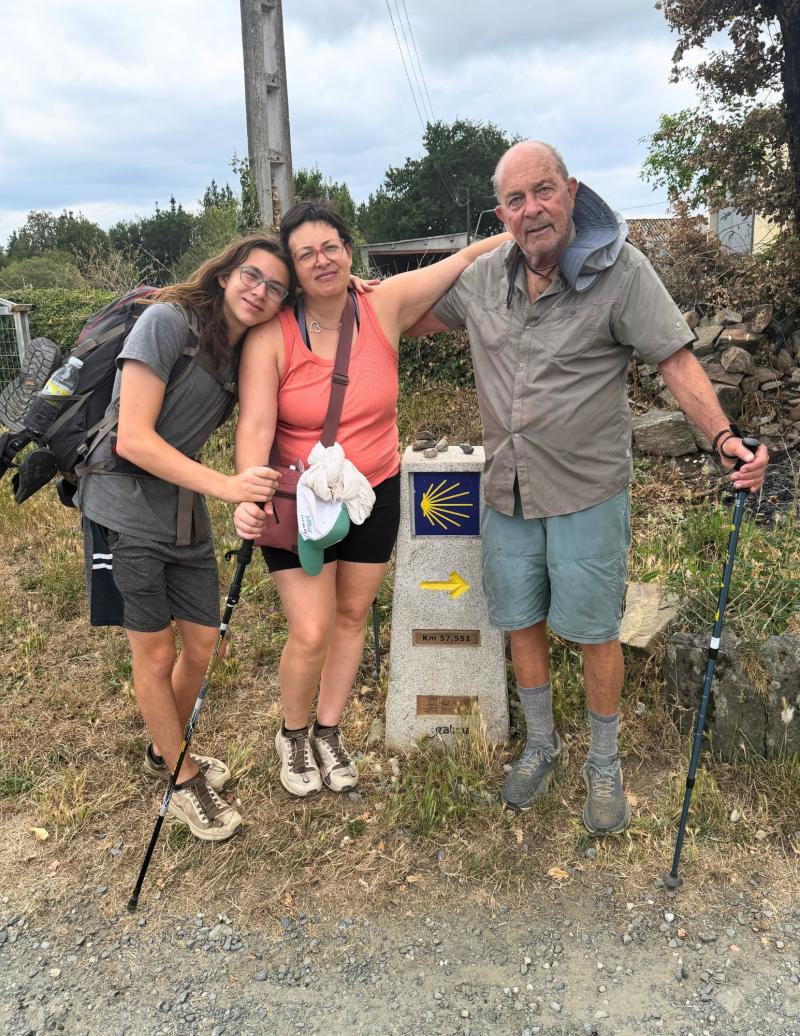
Day Eight: Fourteen kilometers to As Quintas on a mild, cloudy day.
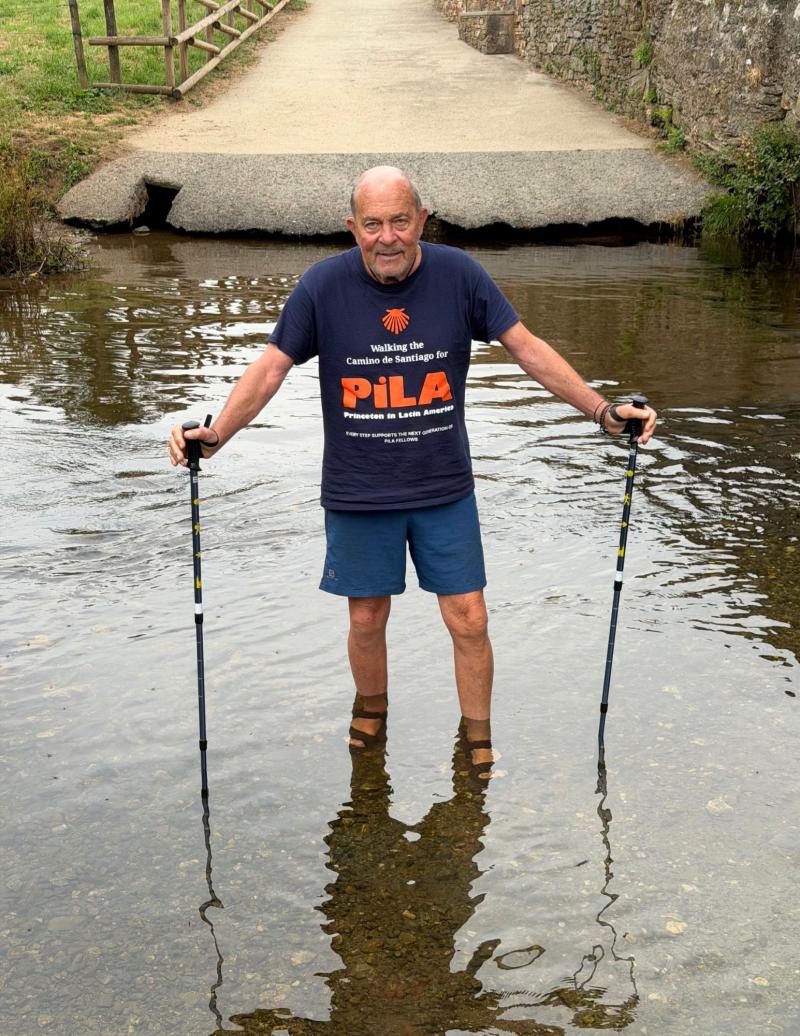
Ribadiso, after only about an hour and a half of walking, called for another swim in the river that runs through the town. It was chilly; the water was surprisingly low (Galicia is suffering from a drought), but I managed to submerge myself several times—part of my Camino ritual (see below).
It was a day of transition. My daughter Andrea observed that on any journey of this nature, there comes a point where the excitement of the outset has begun to fade, the ordeal of the undertaking makes itself felt, and the fulfillment of the pilgrimage still seems distant.
I found myself experiencing that transition as well—not over one of the principal purposes of this walk, supporting PiLA, but rather over my role as its leader: not only as the father of Andrea and Jonny and grandfather of Alex, but also as the one who knows the Camino fairly well.
During a mid-morning coffee break, I shared these feelings and, much to my relief and pride, there was a general acknowledgment that ownership and leadership of the walk were being shared by all.
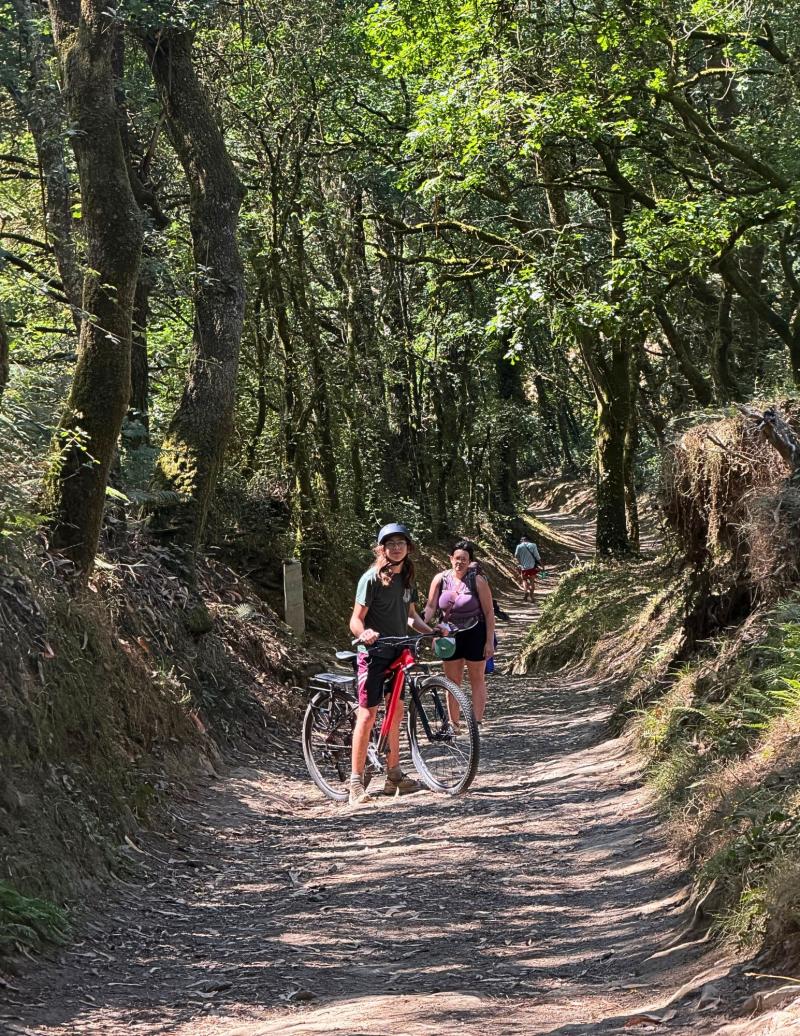
In Arzúa, only three kilometers farther on, Andrea was able to rent a bicycle for Alex, who had been hoping for one for several days. I think it brought me as much joy as it clearly brought him to watch him disappear down the path.
The Camino certainly has its ordeals, but I also believe in eating well. Thanks to Jonny's research, we found a restaurant that served a meal as good as one might find in Washington, Boston, or New York.
Then it was on to As Quintas, a village with a population of two: Heidi and her partner, Rolf, our hospitaleros. It was there that, at my recommendation, Jonny showed Heidi several bites on his arm.
"Yep," she said. "Bed bugs."
I had them as well; we had shared a room several days earlier. Following Heidi's instructions, we stripped down, she handed each of us a robe (see below), and proceeded to wash every piece of clothing we owned while spraying our backpacks and the rest of our equipment. She then sent us off for long, hot showers.
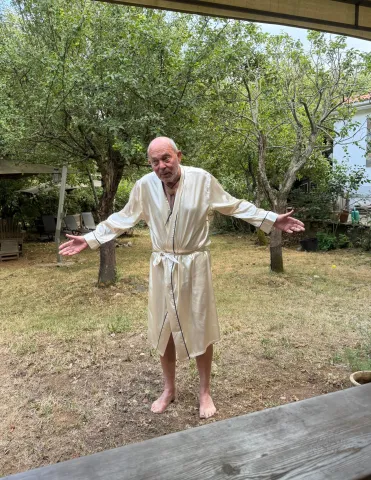
Our reward at the end of the evening was a communal meal every bit as memorable as lunch—and Spain's victory over France in the World Cup. The timing could not have been better. We'll be in Madrid for the final.
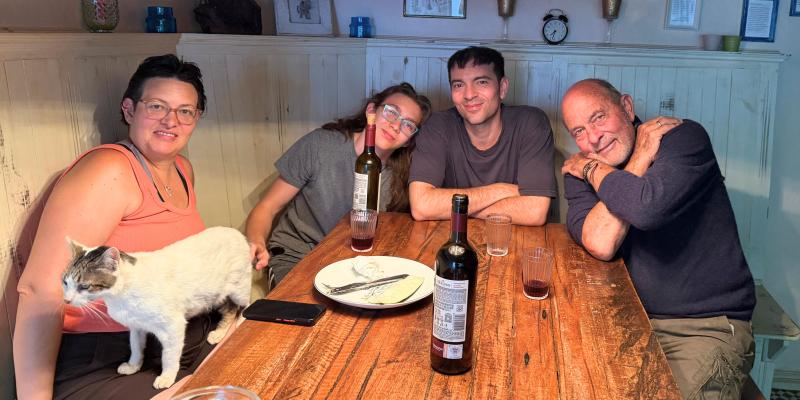
Day Nine: Twelve Kilometers to Santa Irene
Twelve kilometers to Santa Irene, which lies about 21 kilometers—or roughly half a marathon, for those who are measuring—from Santiago.
Alex took off on his bicycle well ahead of us, discovering that he could manage on his own in a foreign country. He did just fine.
It was Jonny's last day with us, as he returns to Washington tomorrow. He will be missed. He brought both joy and leadership to this walk, and I know he is already considering returning one day to complete the entire French Way.
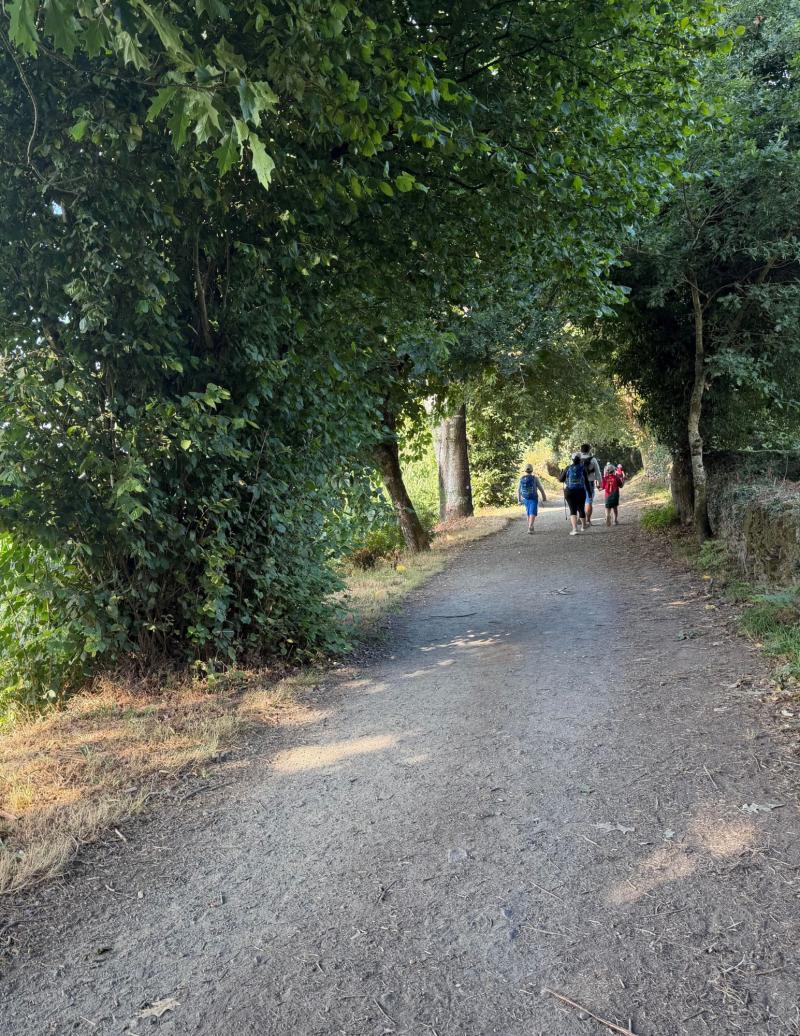
Day Ten: Twelve kilometers to Lavacolla
Today's walk was intended to be an easy 12 kilometers to Lavacolla, but it was complicated by a two-hour delay in Pedrouzo as we worked through difficulties returning my grandson's bicycle.
Lesson learned: the messenger and transport system along the Camino works. This network of drivers serves as a community of support. They know one another, the albergues, and the cafés along the way, and they can be trusted. After a while, they even begin to recognize you by name. May I be forgiven for the expression: the Camino does provide.
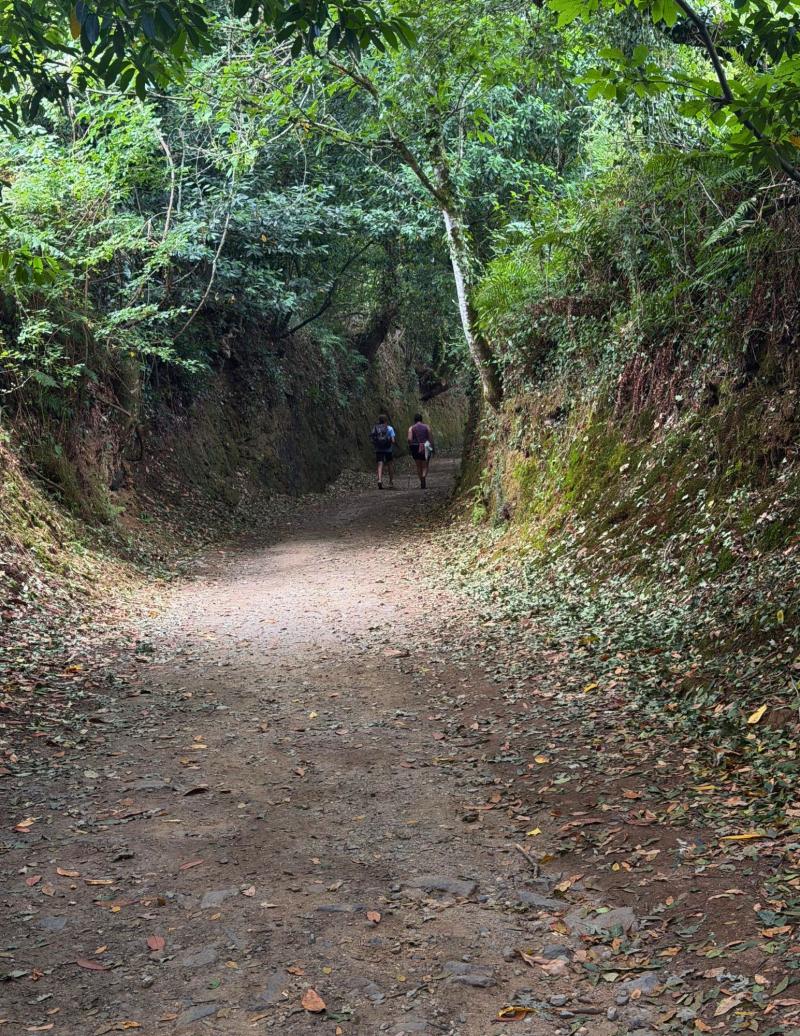
There are sections of this route that, I choose to believe, bear the imprint of millions of pilgrims over the course of a thousand years. Their footsteps have worn the paths so deeply that they create tunnel-like passageways through forests of oak and chestnut trees. Such as...
Our destination for the day was Lavacolla, about ten kilometers from Santiago. Some pilgrims continue on, but I prefer to stop here, rest, and set out early enough the next morning to arrive in Santiago in time for the noon Mass.
Lavacolla takes its name from the tradition of pilgrims centuries ago who stopped here to wash certain parts of their bodies (I'll leave that to your imagination—and perhaps your study of Latin) before descending into the city and entering the cathedral. Believe me, I needed to follow that tradition myself.
Join us tomorrow as we make our way to the Praza do Obradoiro.
Day Eleven: Only ten kilometers remained to Santiago.
After five, we came to a café where we stopped for breakfast. Off in the distance, we heard piano music.
"This sounds like a movie," said my grandson Alex. "Like the music playing while the final credits are rolling."
It turned out the music was coming from a pianist farther up the trail at Monte do Gozo, the point where pilgrims first catch sight of Santiago in the distance.
We walked up, and my tears began to flow.
"You can cry, Dad," my daughter Andrea said.
And I did, as I embraced Alex.
"Thank you," he said.
"And thank you," I replied.
We then made our way down through the somewhat drab twentieth- and twenty-first-century streets of Santiago, following the yellow arrows in search of the historic center. Before long, the asphalt gave way to ancient stone streets, and I found myself back in what felt like familiar territory, leading us to The Last Stamp, my preferred home whenever I am in Santiago.
Once settled into our private room on the top floor—with a view of one of the church steeples—we headed to the market to choose our lunch: razor clams, cockles, and zamburiñas, the small Galician scallops. We took our selections to a nearby restaurant, where they would be prepared while we attended the pilgrims' Mass. A selection of Galician cheeses and fresh fruit sustained us before we made our way to the cathedral.
It was not easy for me to follow every part of the service, but the priest's sermon seemed to be a call for peace among the many nations and cultures represented by those gathered there.
It was probably just as difficult for Alex to follow, yet he seemed genuinely moved. At one point, he embraced me once again and thanked me for sharing the Camino with him.
Then came the moment I had been hoping for: the botafumeiro, the enormous incense burner (it weighs about what I do), swinging dramatically through the length of the transept. It is relatively rare for the botafumeiro to be used during Mass, reserved for special religious occasions or when sponsored by pilgrims. In this case, it may well have been made possible by a large group of Polish pilgrims who happened to be staying at our albergue. I was delighted that Andrea and Alex were able to experience it.
After lunch and a well-deserved nap, we picked up our Compostelas—the Latin certificates confirming completion of the pilgrimage—and then made our way to the Praza do Obradoiro, the great plaza before the cathedral, filled, of course, with hundreds of fellow pilgrims.
"I want to finish this walk, every step of it. Where is kilometer zero?" Andrea asked.
"Somewhere out there in the center," I said.
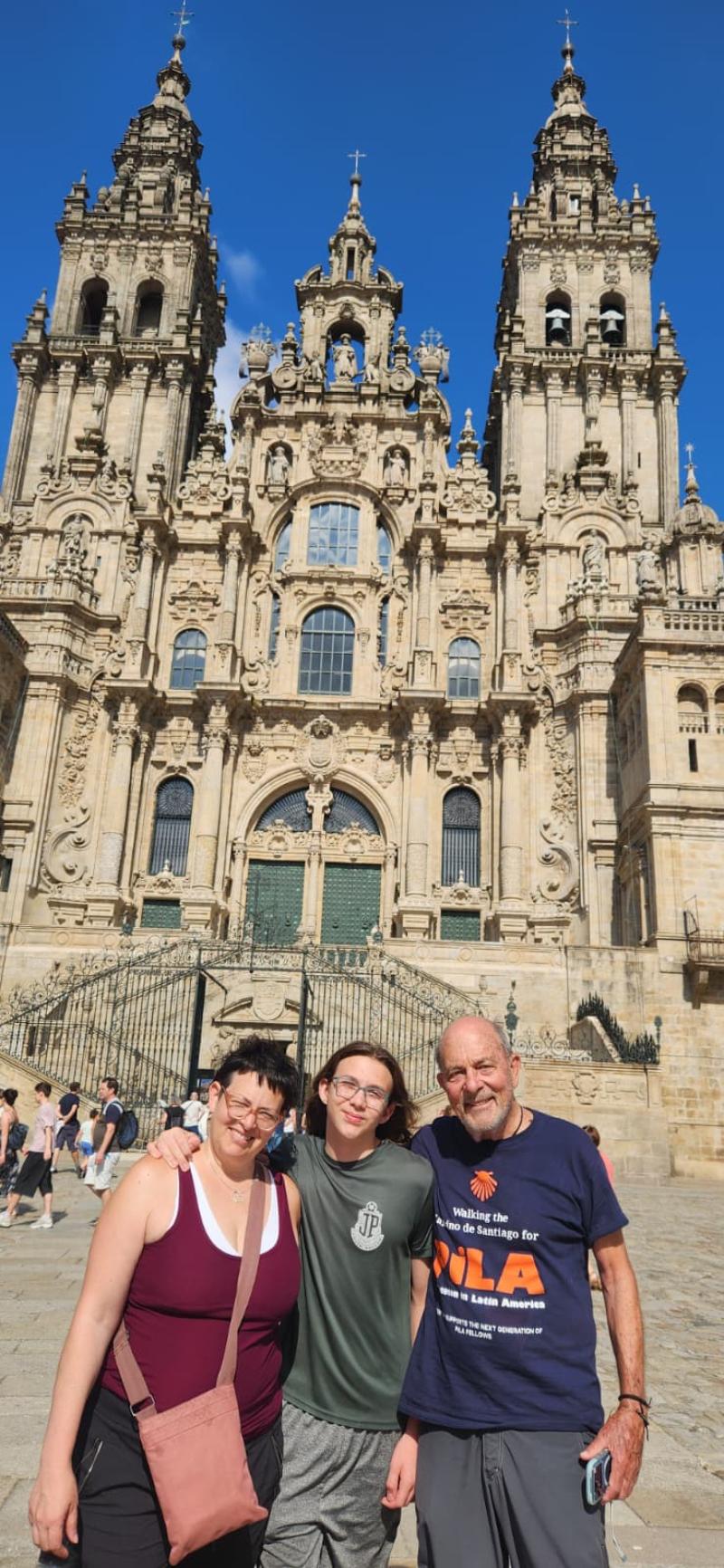
The three of us gathered in an embrace.
"We made it."
The photograph says much more than the Compostelas ever could.
Beyond Santiago
And the walk continued, in a fashion.
“How about we go to Finisterre on Saturday? We can take a bus,” says Andrea. It’s about 90 kilometers away from Santiago. I had walked it in 2013.
“Hmm, not sure I want to do that.” I had looked forward to relaxing in Santiago, and taking any kind of public transportation while on the Camino was very much against another of my principles, even though we had finished our walk.
“Well, maybe Alex and I will go,” she said.
“OK, I’m with you.”
And, in a breath, my reluctance had turned into full acceptance. My daughter had taken over.
“How about a rental car?” she said.
“Much better.”
So, the next morning, we were off on a mild, sunny day, Andrea at the wheel with a slight twinkle in her eye. I was in shotgun, Alex spread out in the back.
“I have a plan. Do you know about the waterfall?”
“No, I don’t think I do.”
The Cascada de Ézaro is one of the very few places in continental Europe where a river cascades directly into the Atlantic Ocean. The Xallas River cuts through a coastal massif of 380-million-year-old granite before dropping 40 meters over a dramatic vertical cliff directly into the sea. We took the boardwalk along the bay to the Cascada and were all three left with the desire to take a plunge into the crystal-clear waters of the bay at its base.
But my daughter was on a mission. And it had just begun.
Now on to Gures Beach, in a quiet cove accessible only by a somewhat dicey (for me, at least) climb down a steep dirt-and-stone trail. It reminded me of an adventure I had had with my three children to a remote beach in Ubatuba, in São Paulo State, Brazil, some 35 years ago. To reach the encampment (that’s the best way I can describe it), we had to scramble, at night, with no flashlight, through the jungly Mata Atlântica. We were welcomed by an American expat and his Brazilian wife, who had built this rustic hideaway, served a delicious moqueca seafood dinner, and spent the night in an open-air A-frame structure that served as our bedroom. And the next day we had entirely to ourselves a broad expanse of beach so pristine that it seemed as if we were the first to discover it. I like to think that it was experiences such as that that encouraged our children to explore, as Andrea was doing that day on the western coast of Galicia.
Then on to Finisterre, the “end of the earth” until an Italian sailor put that myth to rest more than 500 years ago. As we approached the town, we returned to the portion of the Camino that some pilgrims take to extend their walk beyond Santiago, and we began to see some of the familiar backpack-laden figures. I know the town pretty well, but on foot, so I was trying to get my bearings in a car.
“Let’s go all the way down to the waterfront,” I said, not sure at all if we could find a parking place. But a turn at the end of the road, in front of the docks, brought us to a parking area and a car pulling out at that moment, as if on cue. And precisely by one of my favorite restaurants in Finisterre, the Old Captain. Not only for the quality of the food, but the hospitality of its owner, Tocho, who served us grilled prawns, scampi, and a salad of tomatoes, local Galician cheese, and anchovies.
So far, it could not have been a better day, even if I could have scripted it.
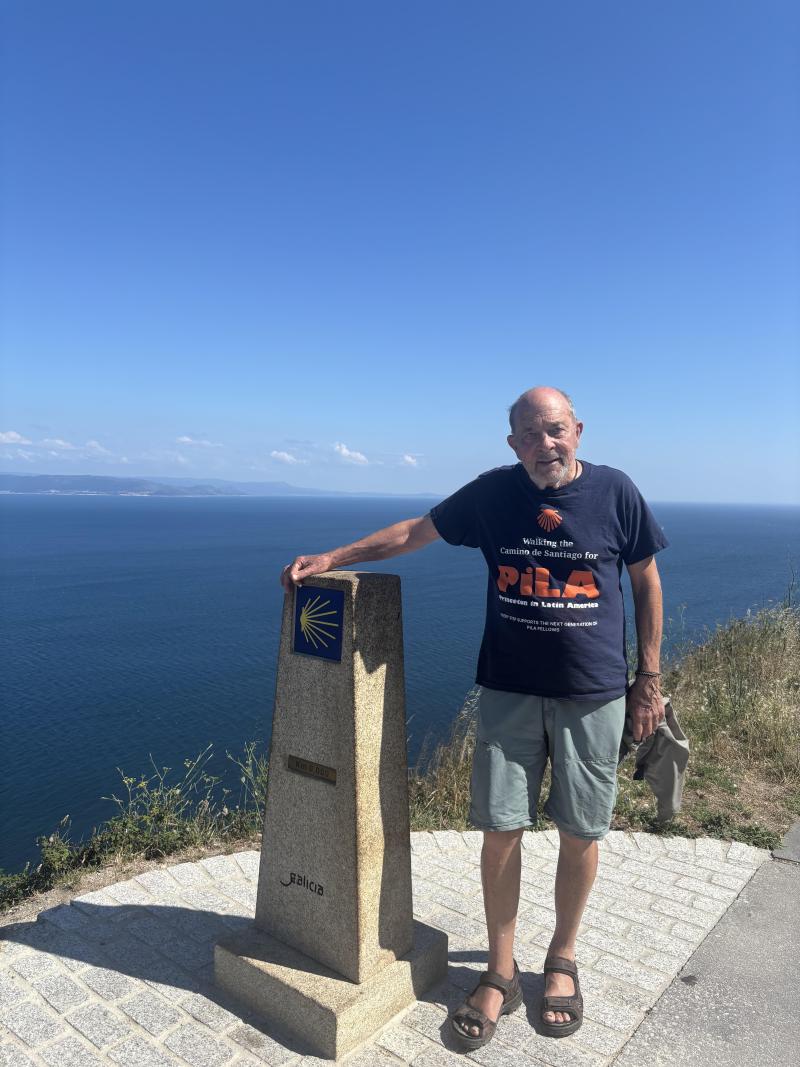
The actual “end of the earth” lies at the faro, the lighthouse, another three kilometers farther west. We drove out—we had had enough of walking for a while—and went to the cliffs at the tip where, in addition to the usual photos, I wanted to share some of my experiences: burning my socks at sunrise (part of an old custom, now prohibited), leaving a stone for a relative who has since passed away. But I also wanted to have my picture taken at another zero-kilometer marker, with the caption, “I went to the end of the earth for PiLA” (see below).
Back in Santiago, we rested up, went out for a late dinner, then proceeded to the Praza do Obradoiro for one last part of the Camino pilgrimage that I cherish: the performance by the Tuna de Derecho de Santiago de Compostela, musicians dressed in 16th-century attire. Under the cloisters across from the cathedral, surrounded, I believe, mainly by those of us who walk the Way, they play and sing Spanish and Latin American songs, many of them so well known that the crowd, with full-throated enthusiasm, usually joins in.
We did.
(And I have no voice.)
Facing a very early rise to get to the train the next morning for our return to Madrid, we headed back to the albergue, crossing the Praza—with one last hug—and up through the high-ceilinged tunnel that leads to the upper section of the historic center. It is not unusual for a performer—a player of the gaita (the Spanish version of the bagpipes), a violinist, a singer—to take advantage of the sound chamber created by those ancient walls and the fact that the tunnel serves as a main passageway for so many, and this evening was no exception: an opera singer. He was about to perform his last piece of the night, "Nessun Dorma." He was no Pavarotti, but he moved me all the same.
Final note: Alex is a soccer player. As the entire world knows, Spain was playing in the final game of the World Cup the next day. To get the full feel of the moment, we watched the first half among the crowds at Puente del Rey Park, but then returned to the somewhat quieter atmosphere of our hotel to see the second half. To be in Madrid with my daughter and grandson to see Spain beat Argentina, 1–0, in the 106th minute with a spectacular goal by Ferrán Torres, then witness the crowds filling the streets with cheers and song, was perhaps the perfect finale to our trip. Alex recorded the celebrations from the balcony of our hotel room, then hopped on the bed to busily send the videos back to his friends in Boston, a broad smile on his face.
As I said, even if I had been able to, I couldn’t have written a better script. Of the entire experience, from Sarria to Santiago, and beyond.
Explore David's Previous Camino Adventures
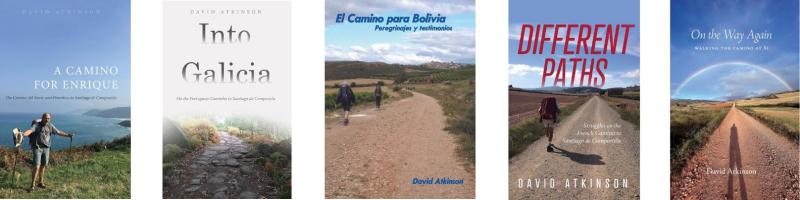
The 2026 Camino is just one chapter in David's lifelong relationship with the trail. Explore reflections on his previous pilgrimages in Into Galicia: On the Portuguese Camino to Santiago de Compostela, A Camino for Enrique: The Camino del Norte and Primitivo to Santiago de Compostela, Different Paths: Struggles on the French Camino to Santiago de Compostela, El Camino Para Bolivia: Peregrinajes y Testimonios, and On the Way Again: Walking the Camino at 81.
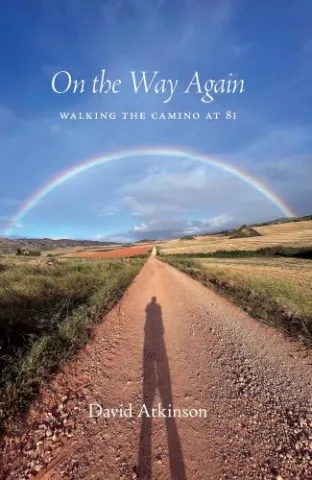
Below, is a snapshot of his most recent book, On the Way Again: Walking the Camino at 81. Enjoy!
Description
Some say that the French Way has three major stretches: the first for the body, the physical challenge of beginning a long walk over some major climbs and descents; the second for the mind, the mental challenges of extended expanses on the wide open fields of the Meseta; and the final stretch for the soul, the emotions of growing closer to one's destination in Santiago.
On this, my fourth pilgrimage on the French route, I wanted to relive all three. But while every step on the Camino engages body, mind, and soul, each to a varying degree depending on the terrain, the weather, your conditioning, and your spirit, this pilgrimage had more to do with the body than any I had ever undertaken. It proved, however, a challenge—and a fulfillment —for the mind and soul as well.
About the Author
Born in Washington, DC, in 1941, David spent his earliest years in the Virginia suburbs of that city, but at the age of eight, escaped, as it were, to Rio de Janeiro, his father's first post as a Foreign Service Officer. The experience gave him a second language, a second culture, and a love of wandering. Four years in Rio were followed by two in Rangoon, where he was again allured by a world not his own and felt comfortable enough to explore. Growing up abroad, he believes, strengthened his qualification to be accepted at St. Paul's School, followed by Princeton University, then the Fletcher School of Law and Diplomacy. He had a forty-year career in international development finance at the Inter-American Development Bank, working with countries throughout Latin America and serving as the Bank's Representative in Brazil, Bolivia, Nicaragua, and Mexico. After retiring from the Bank in 2004, he became an active and proud member of the Board of Directors of Princeton in Latin America (pila @princeton.edu). Twice married, the second time for keeps to Martha Luz Duaz Zelaya in 1978, he is the father of Michael by his first marriage and Andrea, Christopher, and Jonathan by his second, grandfather of Ria Terneus, Jared Atkinson, Alex ("Turtle") Antonowich, Annabelle ("Petiza") Antonowich, and Charlotte ("Punky") Atkinson, and great-grandfather of Lucia Terneus. Upon retirement, David and Martha Luz returned to their residence in Bethesda, MD, where he sometimes feels like a foreigner, but spends a good amount of time abroad, where he often feels at home.
Thank You!
Whether you've chosen to make a gift, follow David's journey, or simply learn more about PiLA, thank you for being part of this campaign. Every step, every story, and every contribution helps create opportunities for the next generation of PiLA Fellows.