
By Chloe Dawson, PiLA Fellow, Osa Conservation, Costa Rica on
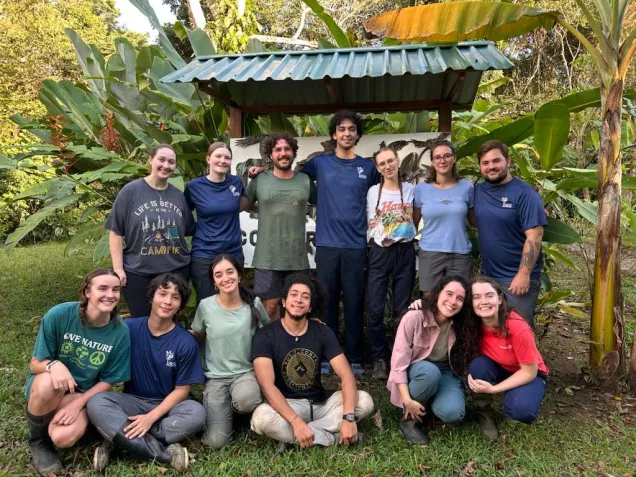
At Osa Conservation in Costa Rica, the human world is deeply intertwined with the natural. One has to adjust their expectations to accommodate the rhythm of the surrounding ecosystem, from waking up at 3:00 a.m. to the guttural, bellowing calls of howler monkeys to rescheduling fieldwork in light of torrential downpours. Because of this intimate proximity, I started to recognize large, iconic mammal species quickly after arriving for my PiLA fellowship, such as the four species of monkeys, peccaries, and tamanduas. But the Osa Peninsula holds 2.5% of the world’s biodiversity, meaning there was always something new to discover. Even researchers with years of experience devoted to particular taxa were often stumped by the endless mysteries of the jungle.
I was particularly in awe of those who studied birds. Listening from the canopy tower, I would hear a beautiful but aggregate blur of noise, punctuated with a few noticeable Red-Lored Amazon calls. Meanwhile, the calls that blurred together to my untrained ear sounded clearly distinct to Paco, the campus ornithologist: the low swooping call of a White-Tipped Dove, the bold cackle of a Yellow-headed Caracara, the meek chirp of a Bananaquit.
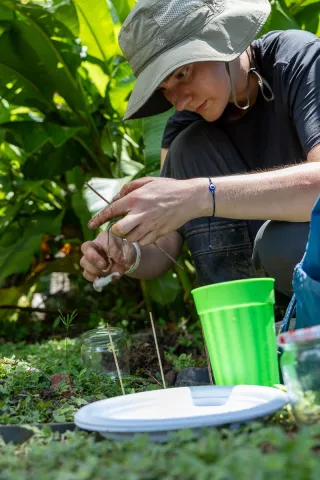
My main job as a fellow was to study bird, beetle, and mammal biodiversity on Osa Verde Regenerative Farm, and I was particularly intimidated to study the birds, imagining I could never start to pick up on their calls like Paco; it seemed outside of my capabilities. Yet, for the next ten weeks, three mornings a week, when my alarm went off at 4:30 a.m., I threw my binoculars and headlamp into my backpack, yanked open the humidity-swollen door to my room, pulled on my rubber boots, and walked 20 minutes along the gravel road to complete bird surveys before 7:00 a.m. breakfast.

My progress in bird identification was slow and, to be honest, my improvement from start to finish was quite modest. But by the time I gave my final project presentation, I could confidently identify many birds by sight and several by their calls, which was a leap from where I began.
—
Before arriving in Costa Rica as a fellow, I had been outside the United States only twice, and never to Central America. I spoke Spanish but was shy about my mistakes and accent, often letting the fear of poor interactions and misunderstandings hold me back from practicing to the fullest. I struggled to understand the Tico accent, didn’t know much Latin music outside of popular artists like Bad Bunny and Selena, and had no idea how topographically diverse the country was (an oversight that would haunt me when I packed beachside clothes for a camping trip with elevation gain!).
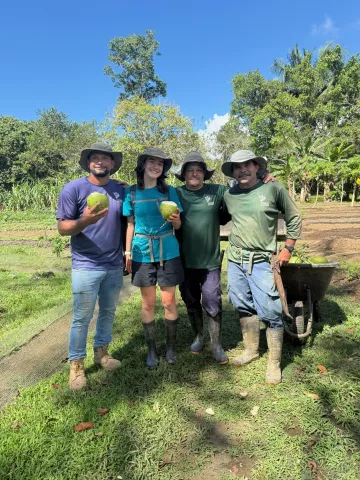
Working at Osa Conservation gave me a chance to immerse myself, observe, ask questions, get comfortable with making mistakes, and not take myself so seriously. By my last few weeks on campus, I was downing agua de pipa (green coconut water) and cracking jokes on long walks with my friends, dancing (extremely poor) bachata and salsa, and counting out spare colones (Costa Rican currency) to order a round of chiliguaro (delicious shot that tastes like a spicy Bloody Mary) for the table.
—
My family came to visit me at the end of my fellowship, and we went on a tour sharing the history of chocolate and coffee production, two of Costa Rica’s main exports. I was struck how much new information I learned during the 1-hour talk, despite having spent six months in the country. It was humbling to realize how, even after half a year, I had barely scratched the surface of the rich and vibrant national culture and history.
This experience laid bare a truth that I’ve been grappling with for a while: I cannot do/know/experience it all. PiLA has dozens of amazing fellowship positions in several countries, doing all kinds of incredible work, and I could do only one. And even at that one fellowship, I could immerse myself in only one part of the country and devote myself to work on one project.
There are millions of incredible people that I will never meet, places I will never go, and cultures I won’t be able to experience firsthand. Of the dozens of career paths that interest me, I’ll eventually have to narrow down to one, or at least one at a time. In the forest of life, there are hundreds of bird species singing, and I cannot learn to recognize all of their calls in the short time that I have on this earth.
But I can pause, listen carefully, learn a few, and appreciate them all.
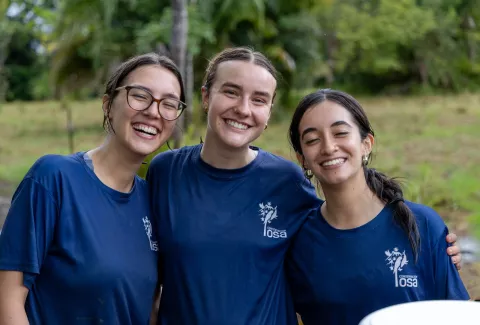
Accepting that we cannot know/do/experience it all opens us up to the profound, unique beauty of what is in front of us. Of all the post-grad opportunities out there, I chose PiLA, and among all the PiLA positions, I ended up at Osa Conservation, with two incredible co-fellows who went from strangers to coworkers to true friends. I met inspiring conservationists from across Latin America working to create a more sustainable and prosperous future. Witnessing the care that people put into their work, sharing childhood stories during long turtle patrol walks on the beach, and daily futbolín (foosball) matches after lunch turned “doing conservation work in rural Costa Rica” from a vague idea in my mind into a vital, colorful, and three-dimensional reality.
The unique environment of my fellowship inspired a renewed appreciation for the present and opportunities to learn. Thankfully, I don’t need to stay at a remote field station in the most biointense ecosystem on earth in perpetuity to live my life with curiosity about the people and world around me. These lessons remain with me as I continue to create a career in environmental justice. Like the symphony of birds in the Osa rainforest, no matter where I go, I am always embedded in the rich, beautiful, and complex fabric of my local and global community– I need only to stop, listen, and learn.